Road Lane Markings
Practical Driving Test
Driving Test Video Lessons
Driving Theory Test
Hazard Perception Test
Show Me, Tell Me Test
Driving Schools Directory
Learners Car Insurance
Uk Road Signs
Theory Test Centres
Practical Test Centres
Test Centre Pass Rates
Driving Test Nerves
Speed Limits
Car Signaling
Cockpit Drill
Motorway Driving
Automatic Cars
Wet Weather Driving
Driving In Winter
Cornering
Night Driving
Level Crossings
Prevent Skidding
Large Vehicles
Car Terminology
Dashboard Lights
The Driving Test Examiner
Driving Test Shop
Passed
Cheap Car Insurance
Buying Your First Car
Car Maintenance
Car Finance Guide
Pass Plus Course
Efficient Eco Driving
Used Car Reviews
Road Tax Explained
How Cars Work
Car Service Facts
Drink Driving Facts
Road Accidents
Car Breakdowns
Diagnose Car Faults
Car Security
Mobile Phones & Driving
Driving Instructor Training
Driving In The UK
Driving Articles Guide
Free Theory Tests
DSA Theory Test 01
DSA Theory Test 02
DSA Theory Test 03
DSA Theory Test 04
Speed Limits & Stopping Distances
Road Sign Theory Test
Mock Theory Test 01
Mock Theory Test 02
Mock Theory Test 03
Mock Theory Test 04
Links
Sitemap
Contact

UK Road Lane Markings


Road Signs- Information & Road Works
UK road Signs - Signs Giving Orders
UK Road Signs - Direction Signs
UK Road Signs - Warning Signs

Give way to traffic on a major road
Give way to traffic from the right at a miniroundabout
Give way to traffic from the right at a roundabout
Give way to traffic on a major road - can also be used at a mini roundabout Give way to traffic from the
right at a mini roundabout
Give way to traffic from the right at a roundabout

Stop line
Stop line for pedestrians
Stop line at a Stop sign
Stop line at signals or police control Stop line for pedestrians at a
level crossing
Stop line at a Stop sign


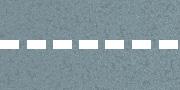
Centre road markings
A broken white line marks the centre of the road.

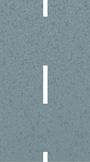
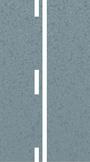
Hazard ahead
Longer broken white lines in the centre of the road indicate a hazard ahead. Never cross a hazard warning line unless you are certain it is safe.

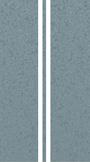
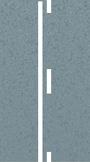
No overtaking
A double solid white lines in the centre of the road mean that overtaking is prohibited in either direction.

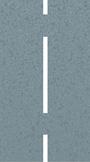
No overtaking
No overtaking for vehicles traveling on the left-hand side of the road.


If traveling in the left-hand lane then you may overtake if safe to do so.

Diagonal hatching

Diagonal hatching - this is used to separate lanes of traffic and to protect vehicles waiting to turn off the road. If the are is bordered by a broken white line you can enter it, but only if it necessary and safe to do so: if it is bounded by a solid white line then you must not enter it except in an emergency.


An edge line. This marks the left-hand side of the carriageway.

A single yellow
A single yellow indicates no waiting or parking during times shown. The times shown will be on a sign near-by.


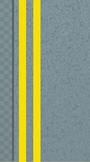
A double yellow line
A double yellow line indicates no waiting or parking at anytime.


Waiting or parking is limited to the duration specified during the days and times shown.


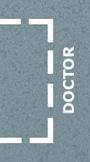
Parking space reserved for vehicles named.


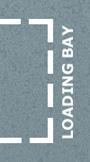
Loading bay - keep clear.


Keep clear - do not block this part of the road.

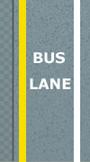
Bus lane

Bus lane. You must not drive in a bus lane during its period of operation unless otherwise indicated by a sign. You may enter a bus lane to stop, to load or unload where this is not prohibited.


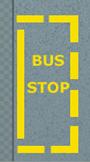
Bus stop
Bus stop. You must not park or stop at a bus stop.

Give way ahead
Warning of a Give way ahead.

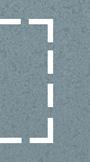
Box Junction
Box Junction. You must not enter a box junction unless your exit is clear. The exception to this rule is: you can enter a box junction when you want to turn right and your exit road is clear but you are prevented from proceeding by oncoming traffic or right turning vehicles in front of you.

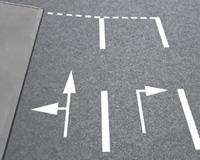
Lane arrows indicating which lane you need to get into at a roundabout. These are often accompanied by road numbers and place names.


No parking or waiting