
Overtaking a Car Tutorial
Overtaking is an essential driving skill. If as a driver you lack the confidence to overtake, in situations where it would be safe to do so, you can cause long queues of slow-moving traffic to build up, causing congestion and frustration among your fellow drivers.
However, overtaking is also one of the most potentially dangerous driving manoeuvres you can undertake, so every overtaking manoeuvre you do undertake requires careful judgment and a full assessment of the risks involved. Remember the golden rule:
IF YOU’RE NOT SURE IT IS SAFE TO OVERTAKE, DON’T!
Safe Overtaking
Before overtaking another vehicle you should always ask yourself ‘do you need to overtake’. Reasons why it may not be necessary to overtake include:
- The vehicle in front is travelling at or near the speed limit
- You will shortly be turning off the road you are on
- The vehicle in front might shortly turn off the road (are you approaching a junction)
- A dual carriageway is not far away.
If you decide to go ahead with the overtaking manoeuvre you must make sure it is safe to do so – can you see far enough ahead to make sure you have time to pull out, overtake and pull back in, safely? Also:
- Are there any junctions from which a vehicle might emerge while you’re overtaking?
- What is in front of the vehicle, rider, or object you’re overtaking?
- Is there a gap you can safely pull back into after you have overtaken?
- Is the vehicle or rider likely to speed up while you are overtaking (for example, going downhill)?
- Can you complete the overtake without exceeding the speed limit?
- Is the vehicle or rider you’re overtaking likely to turn right (are they indicating or positioned as if they might turn)?
- Is the vehicle or rider you’re overtaking likely to pull out to overtake something in front of them (are they indicating or positioned as if they might do so)?
- What is happening behind you? Has anyone already started to overtake you?
Never Overtake
- where the road ahead narrows
- where there are road junctions or driveways from which a vehicle could pull out in front of you
- where you cannot see the road ahead to be clear i.e. when approaching a bend, the brow of a hill, a dip in the road, or a humpback bridge
- where traffic is queuing
- at a level crossing
- between the curb and a bus or tram when it is stopped
- when approaching a school or pedestrian crossing
Overtaking Large Vehicles
Overtaking a large vehicle such as a lorry or bus needs extra care and attention. Larger vehicles can obscure the view to the front of your car more and so overtaking can be more difficult. Follows these guidelines.
- pull back from the vehicle to give yourself a greater view ahead. If you get too close to the vehicle your view ahead will be limited and you may fail to see hazards such as a slow-moving vehicle in front of the large vehicle.
- be certain that there is enough room for you to complete the overtaking manoeuvre before you commit to overtaking. Remember it takes longer to overtake a larger vehicle.
- never assume you can follow a vehicle ahead that is overtaking a long vehicle. If a problem occurs the vehicle may abort the manoeuvre and pull back in.
- A heavy vehicle
Being Overtaken
- where a vehicle is signalling to turn right
- where traffic is moving slowly in queues on a multi-lane road
- in a one-way street
- in a lane turning left at a junction
Overtaking On The Left
- Be prepared to slow down so they can overtake you quickly and safely.
- Never increase your speed.
- Position your car as far to the left as you can.
- Keep alert – the overtaking vehicle may suddenly pull back in front of you.
Overtaking At Night
Extra care is always needed when overtaking at night. Visibility is reduced, even in areas with street lighting, and it is harder to judge speed and distance. Due to the lack of visibility bends and dips in the road may be hard to see.
If you do overtake another vehicle, once you have drawn level with the vehicle you are overtaking, if no other vehicle is ahead of you, switch your headlights to full beam.
If a driver overtakes you at night and you have your headlights switched to full beam, then keep them on full beam until the overtaking vehicle is level with you. The extra light will help them overtake you safely. Once they pull past you turn your headlights to dip.
Cyclists and Motorcyclists
- Always allow them as much room as you would a car.
- They may need to suddenly avoid a drain cover, pot hole, debris, or a wet, oily, or icy patch of road, which could cause them to wobble or swerve.
- On windy days, be careful a gust of wind doesn’t blow them into your path.
Overtaking Horses
Key Signs
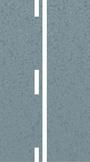
Broken White Line You can cross to overtake
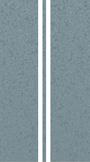
Solid White Line Do Not Cross To Overtake

No Overtaking