Safe Winter Driving
Winter weather can make driving dangerous. When the weather turns bad and snow, ice or fog causes havoc on our roads. The often-quoted advice is simple - stay at home.
This may be wise, but in reality, it is not always practical. However, with a little common sense, the dangers of driving during winter can be kept to a minimum.
Firstly, as autumn draws to a close and the winter weather approaches, give your car a little care and attention.
- Make sure your tyres have the correct tread depth. 1.6mm is the legal minimum, but to cope with snow and ice it is advisable to have 6mm.
- Check your tyre pressure, including the spare.
- Check each car light to make sure all are operating correctly, and keep every plastic light covered clean and clear.
- Make sure your car battery is fully charged and in good repair. Cold, wintry mornings can kill any battery that is past its best.
- Fill up your windscreen washer reservoir with a good quality non-freezing concentrate. A 50:50 water to concentrate mix is recommended.
- Make sure your window wipers are in good condition. They will need to be in good repair if they are going to keep your windows clear. Clean them with an alcohol-based liquid cleaner, as this will keep them crystal clear.
- If your car is due or nearing a service, take it in and get it checked out. If your car has any minor faults or is running out of essential fluids the winter weather will soon exaggerate them.
- Buy a screen wiper and a can of de-icier and keep them in your car. It is also a good idea to keep a well-stocked first-aid kit, a good quality, warm blanket. a high viability vest and a torch with spare batteries in your car.
- Apply WD-40 to your door locks, as this will prevent them from freezing up.
As the winter progresses on you should:
- Keep as much fuel in your tank as possible. Winter weather can cause substantial delays. Running out of fuel whilst stuck in a long traffic jam can be unpleasant and dangerous. Topping up with fuel whenever you can will help prevent this.
- Keep your mobile phone fully charged. You may need it to call for help.
- If you drive into bad weather, listen to the local radio station for up-to-date travel news, or use your smartphone to check local news websites for the latest information.
Your Car's Windscreen
If the windscreen is covered by snow or ice, you must clear it completely before driving off. Failing to do so is illegal and can get you charged for careless driving, which can result in points being added to your licence and a fine.
If you leave your car with the engine running to heat up the windscreen, make sure your car isn't on the public highway because if it is, you will be committing an offence. Although leaving a car running on a private driveway isn't breaking the law, it is a prime target for thieves - over 2000 vehicles are stolen each year this way. If this happens to you, don't expect your insurance company to pay out either because they won't.
Don't pour hot water over the windscreen to melt the ice or snow, as this can cause the glass to crack. Let the car warm up and melt the snow or ice, scrape it off or use a de-icer.
Snowfall and ice covered roads can render driving almost impossible.
If you get caught in such conditions follow these rules.
- Where possible move off gently in second gear using as little revs as possible. This will help avoid wheel spin.
- When steering in such conditions you should turn the steering wheel gently and progressively. Never snatch at the wheel turning it sharply as this can cause you to skid and lose control.
- When accelerating, do so gently. Accelerate to harshly and your wheels will spin.
- Reduce your speed and avoid sudden braking. Whenever possible use your engine brake by changing down into lower gears.
- When driving through a bend, reduce your speed on the approach, but ensure you maintain a constant speed and a smooth line through the bend. As you drive out of the bend, you can increase the power. If it's slippery, leave accelerating until you are straightened up properly.
- Increase the gap between you and the vehicle in front. With snow and ice on the road stopping distance can increase 10 fold.
- Keep your car in a high gear and avoid high revs, as this will help prevent wheel spin.
- Try and keep moving, even at a crawl, as moving off from a stop requires much more grip.
- If you find yourself skidding, take your foot off the pedals and steer into the skid. How to cope with skidding
- When driving downhill make sure you start the descent at a low speed, and don't allow your speed to build up. Using a low gear will enable the engine brake to assist in keeping your speed low.
- When driving uphill keep up momentum and try not to stop, as you may not get going again. Use the highest gear possible.
- Busier roads are more likely to have been gritted, so plan your journey to take these roads.
- Black ice is very difficult to see, but will glint in the sunlight and moonlight. When driving over it tyres will make no noise and steering will be very light. You must use the most extreme sensitivity and delicacy with all controls. Any movement in the car, such as the brakes or steering wheel, could cause it to skid and lose control.
If You Get Stuck In The Snow
- If stuck in snow don't keep trying to spin the wheels in an attempt to gain grip, as this will only dig you deeper in.
- Do turn your wheels from side to side several times to help push the snow out of the way.
- Be gentle with the accelerator - the slower the better, as this will allow the tyres to take more grip.
- Move snow away from the wheels using whatever you have to hand - even if it is only your hands.
- Putting sand, gravel or grit in the path of the wheels will help the tyres gain grip.
- Shift from reverse to forwards, and back again. Each time you're in gear apply the accelerator gently. This will create a rocking forward and backwards motion, which may help your tyres get grip.
- If heavy snow is forecast, and you have to drive, take with you a shovel, hi-vis vest and some extra warm clothes.
Driving In Fog
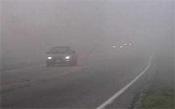
Fog limits visibility
The award for most dangerous weather conditions goes to fog. It takes a truly foolish driver to drive fast in fog. When fog is at its worst, you should park your car somewhere safe and wait for it to pass. However, if you find yourself driving in fog:
- Reduce your speed.
- Turn your headlights to dip.
- If visibility is less than 100m, turn on your fog lights.
- Turn on your front and rear wipers and your demisters.
- Brake early and gently so that your brakes lights warn drivers behind you.
- Drive so that you can always stop in the distance that you can see to be clear in front of you.
- If following traffic, travel at a safe following distance.
- At junctions, if fog prevents you seeing on-coming traffic, wind down your windows and listen for for traffic.
- Keep alert. Other drivers may fail to drive in an appropriate manner neither using their lights nor reducing their speed.
- It is difficult to locate your road position without being able to see road markings. To help counter this, change your focal point frequently. Scan and move your eyes around the scene, searching for views that help you gain some perspective.
- When waiting to turn right into a minor road keep your foot on the brake pedal as this will activate the brake lights at the rear and help approaching traffic see you.
- Don't slavishly follow the tail-lights of the vehicle in front; it may take the wrong direction and crash.
- If on a motorway, it is essential you know the locations of the different coloured reflective studs:
- Red: between the hard shoulder and the carriageway
- White: between lanes
- Amber: between the right-hand edge and the central reservation
- Green: at a slip-road entrance or exit
If the fog suddenly clears, don't relax and think you're out of danger. Fog is usually quite patchy, going from a light mist to a thick cloud in a matter of metres. You could turn a corner only to find yourself in a dense blanket of fog.