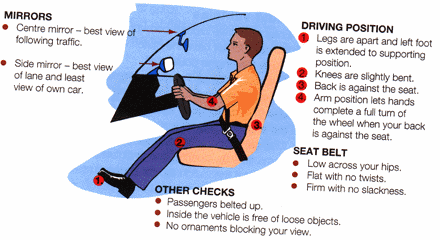
The Cockpit Drill
Before starting your journey, in fact, before starting the engine, you should make a series of checks that will enhance both safety and comfort. The following checks are known as the cockpit drill.
On your driving test, when you first enter the car, you must carry out the cockpit drill to show the test examiner you are familiar with the routine.
Doors
Make sure the boot, the bonnet, and all doors are closed properly. Many cars will show a dashboard warning light if a door or the boot is open, so check your instrument panel once the engine is on.
Seat
Adjust your seat so you can comfortably reach all the controls. You should be able to fully depress the clutch and accelerator pedals without having to stretch.
Recline your seat back to the point where your arms are slightly bent when holding the steering wheel in the ten-to-two position. Raise the seat as high as you can without your head touching the roof.
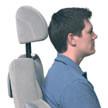
Adjust your head restraint to be in the correct position. Remember, the head restraint is there to prevent whiplash injuries, so you must position it correctly. The base of the restraint should be level with the base of your skull, where it meets the top of your neck. The restraint should be about an inch away from the back of your head whilst driving.
You must make sure your sitting position is as comfortable as possible. You should feel comfortable while being able to reach all the controls without having to stretch. Driving whilst sitting in a poor position can put your back under strain and cause injury.
It is also important not to sit too close to the steering wheel, as this can be dangerous in a collision. It can also help reduce the effectiveness of the front airbag, which needs a certain distance between it and the driver to inflate properly.
Recline the seat back to the point where your shoulders and upper back are resting comfortably on the seat, and your arms are slightly bent when you hold the steering wheel. Adjust the height and reach of the steering wheel so your hands whilst holding the steering wheel rest slightly lower than your shoulders. Make sure the wheel or your hands do not obstruct your view of the instrument panel.
Airbags, additional info
When an airbag is activated, it explodes into your face/chest at 180mph, and can prove fatal if you are sitting too close to the steering wheel. If you have crossed your arms while steering, and an airbag activates, the force of it will probably brake your arms. Any driver under five feet tall, who has to sit very close to the steering wheel to reach the pedals, should consider disconnecting the front airbag; a full harness, may be safer.
Steering Wheel
If the steering wheel is adjustable, adjust it so your hands are resting comfortably, a little lower than your shoulders. Make sure the wheel doesn’t block any part of the instrument panel.
Seatbelt
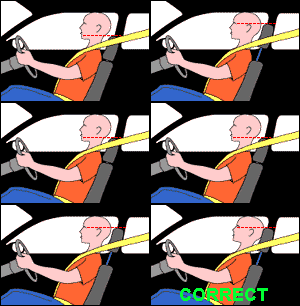
Put your seatbelt on, making sure the belt isn’t twisted. The belt should be strapped firmly against your body. If your car has a seatbelt height adjuster, and most cars do, adjust it so that it is 2-3cms higher than your shoulder so that the belt gives a firm pressure over the top of your right shoulder, with no gap between the belt and the front of your shoulder.
Remember the law states that whilst driving a car, you must wear your seatbelt at all times, except when performing a reversing manoeuvre or if you have a medical exemption certificate.
It is also your responsibility to ensure that any passenger under the age of 14 is wearing a seatbelt.
Mirrors
Check your left, centre, and right mirrors are correctly aligned so you can quickly see what’s happening behind you with a glance without having to move your head unnecessarily.
Side mirrors – adjust them so you can see a small amount of side of the car is showing and that there is an equal proportion of road and sky visible.Interior centre mirror – adjust this so you can see the top edge of the rear window at the top edge of the mirror. Hold the mirror by the edges to avoid finger marks.
On Your Driving Test
You must perform all the checks, in the right order, before you start the engine.